


Noodles & Company
4.76.62K Reviews
App Specs
- Version
- 11.2.0
- Updated On
- License
- Free
- Downloads
- 1,000,000+
- Developer
- Noodles & Company
- Categories
- Food & Drink
- Platform
- Android, iOS
Screenshots
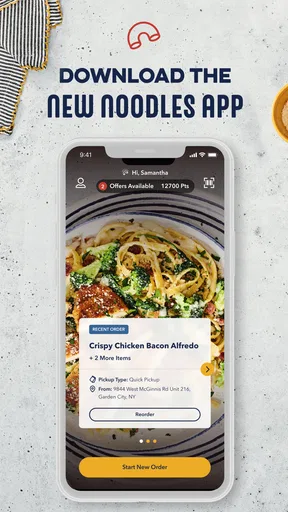
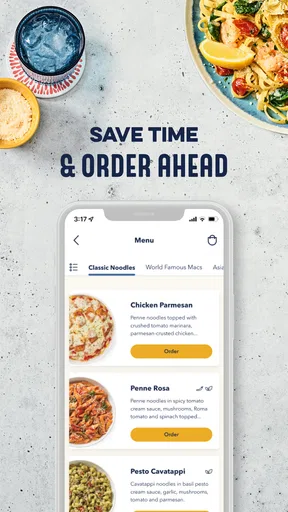
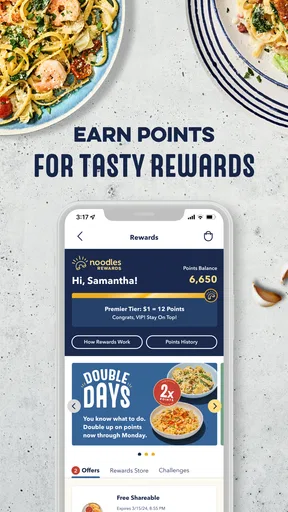
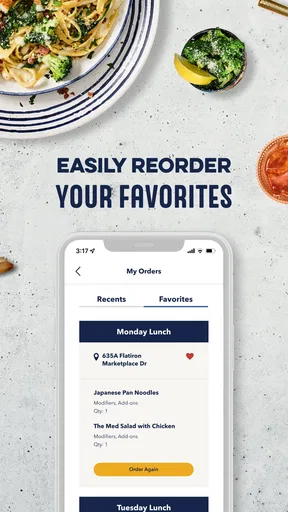
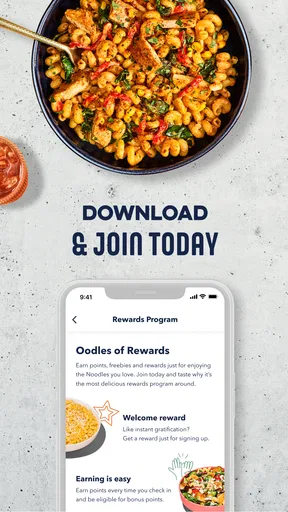
 Analysis by AppCompare
I tend to judge restaurant apps by what happens when I am hungry, distracted, and trying to get dinner organized quickly. Noodles & Company is built for that exact moment: it combines the restaurant’s digital ordering experience with Noodles Rewards, a points-based program intended to make repeat visits easier. I found it most useful when I already knew where I wanted to eat and did not want to rebuild the same order from scratch through a browser or a third-party delivery service.
This is a free Food & Drink app from Noodles & Company, and its focus is deliberately narrow. It is not a general restaurant finder, recipe collection, or meal-planning tool. It is a direct channel for interacting with this one restaurant, placing an order, and keeping reward activity connected to that relationship. That limited scope is also its main strength: when my plan is noodles, pasta, or another familiar Noodles & Company choice, the app feels more purposeful than a broad food-ordering marketplace.
How it works in a shared household
The clearest everyday use case is a household deciding on dinner while everyone is in a different part of the home. One person can take responsibility for the order, collect everyone’s requests, and use the app as the central place to review the meal before checking out. That sounds simple, but it avoids a common problem with group ordering: several people sending separate messages, followed by uncertainty about which version of an order is final.
I would use it this way when one family member wants a familiar dish, another wants something different, and someone else needs a modification remembered. The app is better suited to one person coordinating the purchase than to treating every household member as an independent account holder. The practical boundary is important: the person signed in is effectively the person managing the order and the reward activity, so the household should agree on whose account is being used before anyone starts adding items.
That matters in shared-device situations. If a tablet or phone is passed around the kitchen, I would not leave the ordering screen unattended with the account open. Even without assuming anything about account security features, a sensible routine is to let one adult handle the final review and submission. Other people can contribute their choices, but one person should verify the restaurant, selected items, quantities, instructions, and destination before completing the order.
The useful household habit is to separate choosing food from confirming the purchase. I find that this prevents accidental duplicates, especially when several people are tapping through the menu at once. It also gives the account holder a chance to check whether the order reflects everyone’s request rather than simply accepting the first version someone assembled.
What the app is good at when plans are familiar
For repeat customers, the biggest appeal is reduced friction. If I already know the restaurant and generally repeat the same kind of meal, a dedicated app is more comfortable than searching for the restaurant again every time. The rewards element gives the experience a second purpose: I am not only placing an order, but also keeping my visits tied to a points-based program.
Worth Reading Before You Choose

EA SPORTS FC Mobile 26 Is a Bigger Football Game, but It Takes Time

Flipboard Shows What News Apps Must Do Beyond the Feed

Switching to Android Auto Means Rethinking Your Driving Routine

Google Calendar Makes a Crowded Week Easier to Manage

Ludo King Makes the Most of the Minutes Between Plans

Baby Panda World Brings Quick Play to Modern Phones, but Its Game Library Feels Busy
This works particularly well for a regular lunch routine. Someone who visits Noodles & Company during a work break can keep the ordering process in one place instead of switching between a search engine, a delivery marketplace, and a separate rewards card or account. The benefit is less about discovering new restaurants and more about making a known choice with fewer steps.
I also see value for households that alternate responsibility. If one person usually orders during the week and another handles weekend meals, they should decide whether rewards and order history are meant to stay with one shared account or be kept separate. The app itself should not be treated as a family ledger. It is an ordering and rewards tool, so the household needs its own agreement about who owns the account and who is allowed to use it.
That distinction becomes especially useful when a child asks to place an order. A young person may be perfectly capable of selecting a meal, but selection is not the same as authorization. I would let a child help browse or suggest items while keeping the account and final confirmation with a responsible adult. This is not a criticism of the app; it is simply the safest way to use any restaurant ordering service on a shared device.
Setting boundaries before anyone taps checkout
The initial setup should be treated as an account decision, not merely an installation step. I would first choose the household’s primary account holder, then decide which device will normally be used for ordering. If several people use the same phone, it is worth making a clear rule that the app is not opened casually by anyone who might change an order or use reward activity without permission.
I would also create a simple verbal check before submitting: who is ordering, what is being ordered, where it is going, and who is paying? The app can make the digital part convenient, but it cannot replace that conversation in a busy household. A shared phone often contains many different apps and saved sessions, so the person handling the final step should slow down rather than assume that the current screen represents the intended order.
Another good boundary is to avoid using one person’s rewards identity without agreement. Points-based programs are easiest to understand when household members know whether they are contributing to a shared balance or using their own account. If everyone treats the account differently, confusion can arise later over who expected the reward benefit from a particular visit.
I would keep the app’s role narrow as well. It can be the place to order from Noodles & Company and manage the rewards relationship, but it should not become the family’s only record of dietary preferences, allergies, or recurring instructions. Those details need to be checked for each order rather than assumed to be permanently represented by a past selection.
Coordinating a meal without creating new confusion
Coordination is where a dedicated restaurant app either earns its place or becomes another icon on the home screen. In my experience, it earns that place when the household already has a plan. Before opening the menu, I would gather the essentials: the number of diners, the preferred dishes, any changes each person wants, and whether everyone agrees on the timing.
For larger household orders, I would build the basket one person at a time and pause after each addition. That is slower than letting everyone tap freely, but it is easier to catch a missing item or an accidental repeat. A useful approach is to say each item aloud as it is added, then compare the completed basket with the original list before proceeding.
This workflow is more reliable than asking several people to use separate restaurant apps and trying to combine the results mentally. Third-party delivery services may be more convenient when a group wants food from different restaurants, but that advantage disappears when everybody has agreed on Noodles & Company. In that narrower situation, the direct app keeps the restaurant choice, ordering flow, and rewards activity together.
On the other hand, I would not force the app into a mixed-restaurant evening. If one person wants Noodles & Company and another wants pizza from somewhere else, a broader delivery platform or separate orders may be the more practical answer. The dedicated app is not designed to solve the coordination problem for an entire neighborhood of restaurants; its value comes from staying focused.
Timing also deserves attention. I prefer to review the order after the household has stopped making changes, rather than submitting immediately after the first person finishes. This reduces the chance that the last-minute request from another diner gets forgotten. The app can streamline the transaction, but the quality of the result still depends on the group reaching a clear decision before checkout.
For a recurring family meal, I would use a short shared note outside the app for preferences, then enter the current order manually each time. That may seem less convenient than relying on memory, but it avoids treating an old order as a guaranteed template for today’s needs. People change their minds, and a previous choice may not match the current group.
Age, trust, and responsible use
The app is rated for Everyone, which makes it broadly approachable from an age-label perspective. I would still distinguish between being able to navigate the interface and being ready to control an actual purchase. Younger users can help select food, but an adult should remain responsible for the account, payment decision, address or pickup details, and final submission.
That division works well in a family because it gives children a useful role without confusing participation with control. A child might choose between familiar menu options while a parent checks the final basket. Older teenagers may be comfortable handling more of the process, but I would still set a household rule about permission before an order is placed.
Trust is also relevant among adults sharing an account. A partner or roommate may be allowed to order freely, while a guest using the same device may only be allowed to browse. The app does not need elaborate family features for this arrangement to work; what matters is that the household understands whose rewards activity is being used and who is accountable for the purchase.
I would be particularly careful with a shared device that remains signed in. Convenience is helpful when the same trusted person orders repeatedly, but it becomes a weakness when the phone moves between unrelated users. My recommendation is simple: keep the ordering device under the control of the person who normally manages meals, and make the final review a deliberate step every time.
The Everyone rating should not be read as a promise that every household workflow is automatically safe or suitable. It describes the app’s content context, not the family’s internal rules. Parents, guardians, and account holders still need to decide how much access is appropriate and whether a child can participate only in browsing or also in preparing an order.
Rewards are helpful, but they should not drive every decision
The points-based rewards program is the feature that gives regular customers a reason to return to the app instead of ordering through whichever service appears first in a search. I like that idea when I already intend to eat at Noodles & Company. Keeping visits connected to one rewards relationship can feel more organized than scattering them across different ordering channels.
Still, I would not let points become the only reason to choose the restaurant. Rewards can make a familiar purchase feel more worthwhile, but they do not automatically make an inconvenient location, unsuitable meal, or poorly timed order a good decision. For occasional customers, the program may be a pleasant extra rather than a reason to install a dedicated app.
Households should also agree on whether points are communal. A shared account is convenient for pooling activity, but it can create disagreement if one person assumes the rewards belong to them personally. Separate accounts offer clearer individual ownership, while one shared account may better fit a family that treats restaurant visits as a collective expense. The right choice depends on household habits, not on the app alone.
My practical advice is to use the rewards program as a bonus layered onto a sensible ordering routine. Do not add unnecessary food simply to chase points, and do not choose the app over a better ordering option if the household’s immediate need is speed, variety across restaurants, or a different delivery arrangement.
Where it stands against ordinary alternatives
Compared with ordering through a mobile browser, the dedicated app feels more natural for repeat use because it keeps the restaurant experience in a single, recognizable place. A browser can be perfectly adequate for a one-time order, especially if storage space is limited or someone does not want another account-based app. The advantage here is convenience for people who return often.
Compared with third-party delivery platforms, the app is more focused but less universal. A marketplace is better when I want to compare several restaurants, combine choices, or rely on one service for many kinds of food. Noodles & Company’s app is better when the restaurant decision has already been made and I want the direct rewards connection as part of the process.
Compared with ordering at the counter, the app can help coordinate a household before anyone arrives or commits to the final order. That is useful for busy evenings, but in-person ordering remains attractive when the group is still undecided or needs to ask a detailed question before choosing. Digital convenience should not replace a conversation with restaurant staff when a situation requires clarification.
The app’s strong rating, an average of 4.7 from around 18 thousand ratings, suggests that many users find this focused approach worthwhile. Its reach is also substantial, with over a million installs. I take those figures as evidence of broad adoption, not as proof that it will suit every household. A high level of use cannot remove the basic trade-off between a restaurant-specific tool and a broader ordering service.
Practical fit, device requirements, and daily friction
The app is free, which lowers the barrier to trying it if Noodles & Company is already part of your routine. It has been available since June 2013 and is currently at version 11.2.0, so it is not a brand-new experiment. On Android, it requires version 9 or later, a detail worth checking before installing it on an older household phone or tablet.
That operating-system requirement can matter in families that pass devices from one person to another. A newer primary phone may handle the app comfortably while an older backup device may not meet the minimum requirement. If the shared tablet cannot run it, the household may need to use another ordering method rather than assuming every device in the home is compatible.
I also think about maintenance. A rewards and ordering app is most valuable when it remains available on the device people actually carry, not only on a rarely used tablet in the kitchen. If the person responsible for dinner is usually away from home, installing it on that person’s phone may be more practical than creating a shared-device arrangement that nobody consistently maintains.
The developer is Noodles & Company, which reinforces the app’s single-brand purpose. That direct connection is reassuring for someone who wants the restaurant’s own ordering environment, but it also means the app’s usefulness rises and falls with how often the household chooses this particular restaurant.
Who should use it, and who should skip it
I would recommend it to regular Noodles & Company customers, especially people who place repeat orders and want a points-based rewards relationship attached to those visits. It is also a sensible fit for a household with one designated meal coordinator, because that person can manage the basket and keep the process consistent.
It suits busy couples, families, and roommates when everyone has agreed on the restaurant and one person is willing to take responsibility for the final order. The focused design is useful for a quick lunch routine, a planned family dinner, or a repeat pickup habit where starting from the same restaurant is more important than browsing widely.
I would skip it if you rarely visit Noodles & Company, dislike maintaining restaurant-specific apps, or normally choose food from several restaurants in one session. A browser may be enough for occasional use, while a broader marketplace may be better for variety. I would also avoid making it the center of a household workflow if no one can clearly own the account and confirm purchases.
Someone with an older Android device should check compatibility before planning around it, since the minimum operating-system requirement is Android 9. For a shared family tablet that cannot meet that requirement, the app is simply not the right tool for that device, even if another phone in the household can run it.
My household verdict
After looking at it as both an ordering tool and a shared-household tool, I see Noodles & Company as a practical specialist rather than an all-purpose food app. Its best experience comes from a clear plan: the restaurant has already been chosen, one trusted person manages the account, everyone contributes requests before checkout, and the rewards activity belongs to an agreed account.
I like the balance between direct ordering and a points-based program, particularly for repeat customers who do not want to start from a general delivery marketplace every time. The app is free, broadly approachable, and established enough to feel like a regular part of a restaurant routine rather than a temporary extra.
Its limitations are equally clear. It cannot solve disagreements about dinner, replace careful checking of a shared order, or offer the restaurant variety of a marketplace. The narrow focus is a benefit only when Noodles & Company is already the intended choice. For occasional diners, the installation may not justify itself.
My recommendation is to install it if your household returns to this restaurant often and can set simple account boundaries. Let one person coordinate, involve younger users only at a level that matches your family’s trust and purchasing rules, and review the complete order together before submitting it. Used that way, Noodles & Company is a straightforward companion for repeat meals, with rewards adding a useful reason to keep the restaurant’s ordering experience close at hand.
Pros
- Wide variety of noodle dishes
- including Asian
- Mediterranean
- and American flavors.
- Customizable meals make it easy to adjust ingredients and portion preferences.
- Vegetarian and lighter options are available for different dietary needs.
- Convenient ordering for pickup or delivery through the mobile app.
- Rewards program can provide discounts and benefits for frequent customers.
Cons
- Menu prices may feel high for fast-casual pasta portions.
- Nutrition details may require extra checking for specific dietary restrictions.
- Popular locations can have longer wait times during lunch and dinner.
- Some dishes may arrive less fresh when ordered for delivery.
- Rewards and app promotions may vary by location and availability.
FAQs for Noodles & Company
What is the Noodles & Company app used for?
The Noodles & Company app is designed to make ordering from the restaurant more convenient. After installing it, you can browse the menu, customize eligible dishes, choose pickup or delivery where available, save favorite orders, and view restaurant locations. It is especially useful if you regularly order noodles, pasta, salads, soups, or other items from Noodles & Company.
Can I customize my food order in the Noodles & Company app?
Yes, the app generally allows you to adjust many menu items before placing an order. Depending on the dish and location, you may be able to select ingredients, modify toppings, request substitutions, and choose portion options. Available customizations, prices, and dietary details can vary by restaurant, so review the order carefully before checkout to make sure your preferences were applied correctly.
Does the Noodles & Company app offer rewards or special promotions?
The app may include access to the Noodles Rewards loyalty program, allowing eligible customers to earn points or receive benefits from qualifying purchases. It can also display member offers, limited-time promotions, birthday rewards, or personalized deals. Program terms may change, and some offers can have restrictions, so check the rewards section and the conditions attached to each promotion before ordering.
Can I place delivery and pickup orders through the app?
In many areas, the Noodles & Company app supports both restaurant pickup and delivery, although availability depends on your selected location and local service coverage. You can usually choose a nearby restaurant, select a convenient time, and review estimated fees or preparation details. Delivery options, minimum order requirements, taxes, and service charges may differ by location and order method.
Is the Noodles & Company app free to download and use?
The Noodles & Company app is generally free to download from the official Android or iOS app store. Creating an account and browsing the menu typically do not require payment, but you will pay for food, applicable taxes, delivery or service fees, and any selected extras when placing an order. An internet connection and supported device are also required for most features.


